The Mainstreaming of Conspiracy Theory
University of Richmond, VA 23173
How did conspiracy theory move from the margins of American political life to the Oval Office? This talk traces the rise of conspiracy theory as a Cold War-era social concept and explains why it has become such a salient and disturbing feature of contemporary culture. Conspiracy theory is often understood as an easily-identified problem of logic that can be corrected by a redoubling of Enlightenment rationality — more fact-checking, more debunking, more transparency. But conspiratorial suspicion is also a reflection of important structural changes in the democratic public sphere. It cannot be fully explained by a psychology of individual personality or the analysis of individual cognition — as revealing as these approaches sometimes are. We also need an approach that distinguishes valuable forms of institutional scrutiny from misinformation and political melodrama, and this understanding, I argue, must take account of central role of conspiracy narratives in American cinema, television, and fiction.
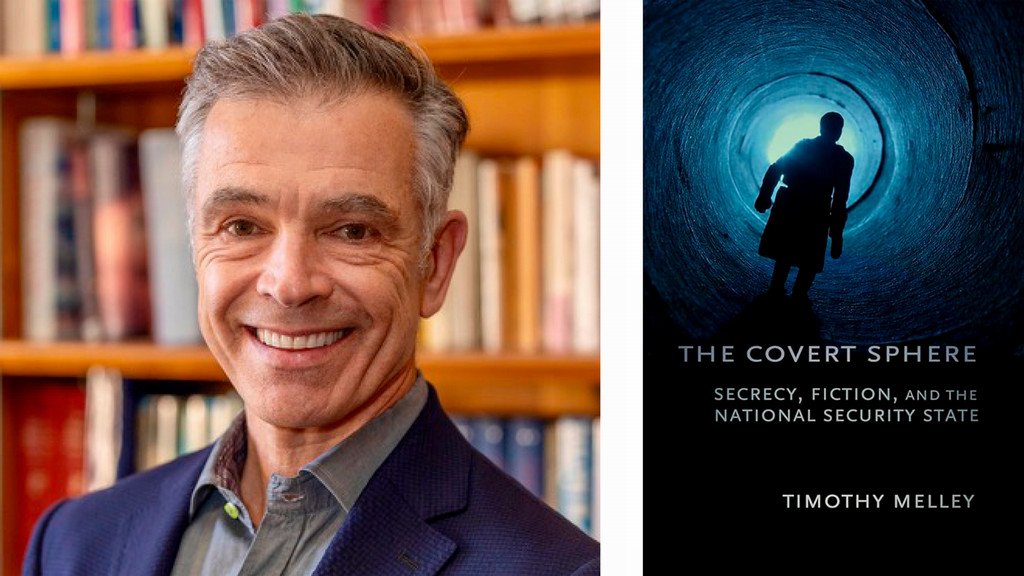
Timothy Melley is professor of English and director of the Humanities Center at Miami University. He is the author of The Covert Sphere: Secrecy, Fiction, and the National Security State (Cornell 2012), Empire of Conspiracy: The Culture of Paranoia in Postwar America (Cornell 2000), and numerous essays and stories. His new book, Imagining National Security: Fiction and the Ends of Democracy is forthcoming from the University of Minnesota Press.
Sponsored by the Department of English and the School of Arts & Sciences.