Beyond the Panopticon: Foucault, Authoritarianism, and Prison Writing in the Arab World
University of Richmond, VA 23173
This lecture examines how Michel Foucault’s theories of power, surveillance, discipline, and imprisonment illuminate, and are transformed by, the political and historical realities of the Arab world. Moving beyond the simple application of European theory to a non-European context, Dr. Diana Obeid considers how colonialism, authoritarianism, state violence, and humanitarian intervention complicate Foucauldian thought. Attention is given to women’s and men’s prison writing as forms of testimony, counter-memory, and resistance.
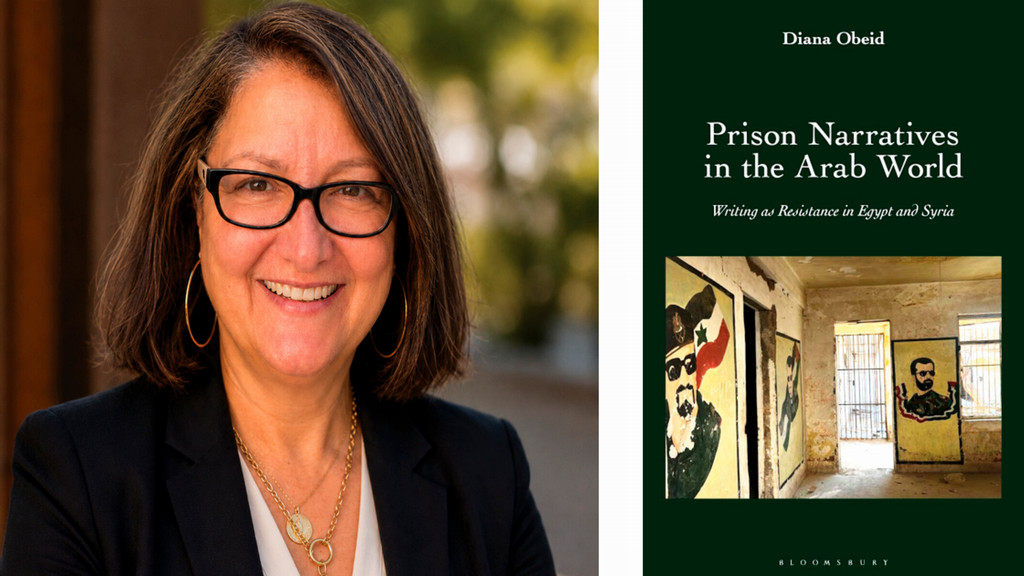
Diana Obeid, lecturer of Arabic and Middle Eastern studies and co-director of the Middle East and North Africa Studies Programs at Christopher Newport University, where she teaches Arabic, Middle East studies, and intercultural communication. She is the founder and director of CNU’s Middle East and North African Studies Program and the founder of Bloomsbury’s Gender in the Arab World series. Her research focuses on Arabic literature, prison writing, gender, memory, migration, humanitarian discourse, and the politics of representation. She is the author of Prison Narratives in the Arab World: Writing as Resistance in Egypt and Syria and is currently writing Druze Women Immigrants in the Diaspora. Through her scholarship, Obeid examines how marginalized individuals and communities use narrative to resist authoritarianism, challenge historical erasure, and reclaim voice, dignity, and agency.